Zugzwang
There is no way left to win. Vodafone is choosing which way to lose.
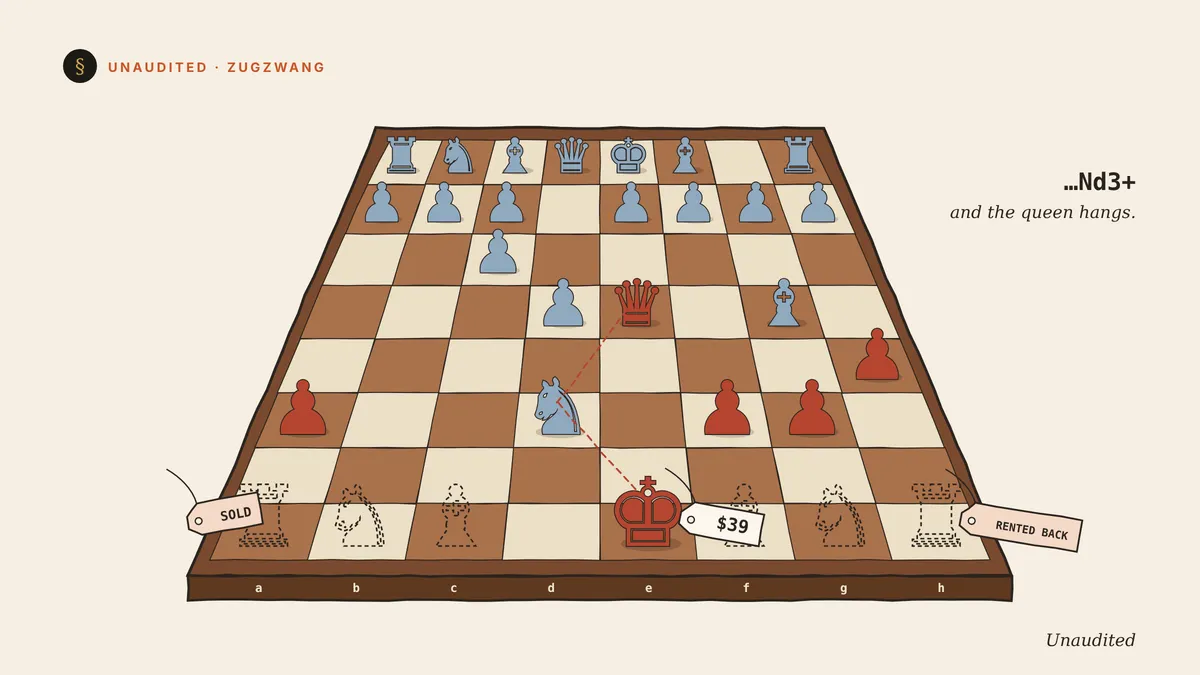

There is a position in chess that club players learn to dread. It is your turn, you must move, and every move on the board makes things worse. The Germans call it zugzwang. Vodafone calls it Black Friday.
On 3 November Telstra halved its SIM plans for four months and put $37 on the banner. On Tuesday the 17th, after much navel gazing on Level 27, Vodafone announced $39, the same as Optus, with double the data. Its existing customers pay $58 for half as much. In July the price list moved four times in a fortnight.
When Grange costs less than Pepperjack, a discount won’t rescue it. Pepperjack is what gets opened at 4pm on Christmas Day, kept for the aunt who asks for the house red. Vodafone’s answer was to pour more of it.
It can move again in December. In chess, that is rather the problem.
Black Friday is won and lost at the door. A customer sees a number on a banner, sorts the comparison site cheapest first, and has handed over a credit card before the critical information summary has finished loading. Nobody in the history of Australian retail has read one of those to the end, and the telcos have priced accordingly.
Telstra got to the door first. From 3 November its Upfront SIM-only plans went half price for four months, for new services only. Basic, with 50GB, is $37 a month. Essential, with 180GB, is $42, and Premium, with 300GB, is $49. In month five they go back to $74, $84 and $99, by which point the customer has stopped looking and Telstra knows it.
Optus followed with offers running to 6 December. Its Small Choice Plus plan is $39 a month for a year with 120GB, then $60. Medium is $49 with 240GB, and Large $69 with 480GB.
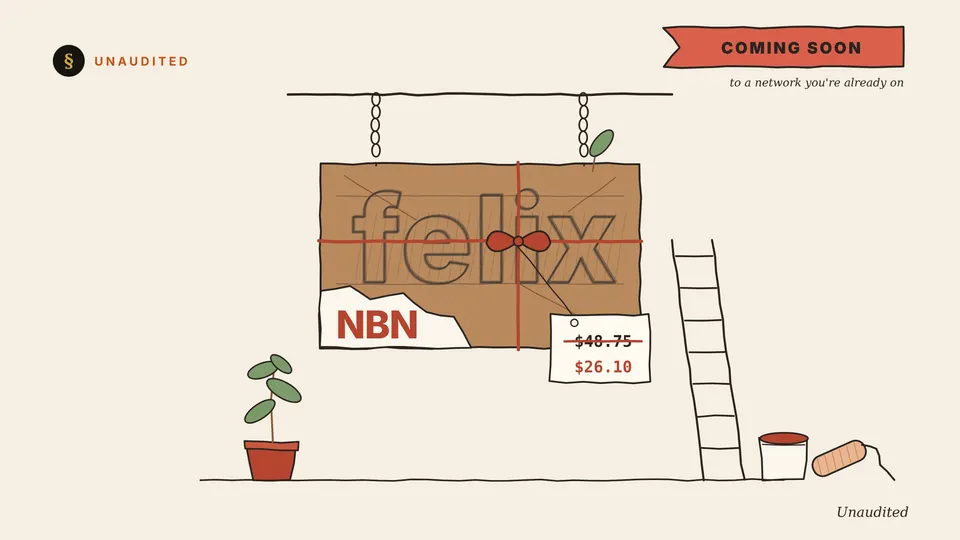
Vodafone made its move on 17 November. Small is $39 for twelve months, then $58. Medium is $49, then $68. Large is $55, then $78. The data doubled, to 130GB, 440GB and 840GB.
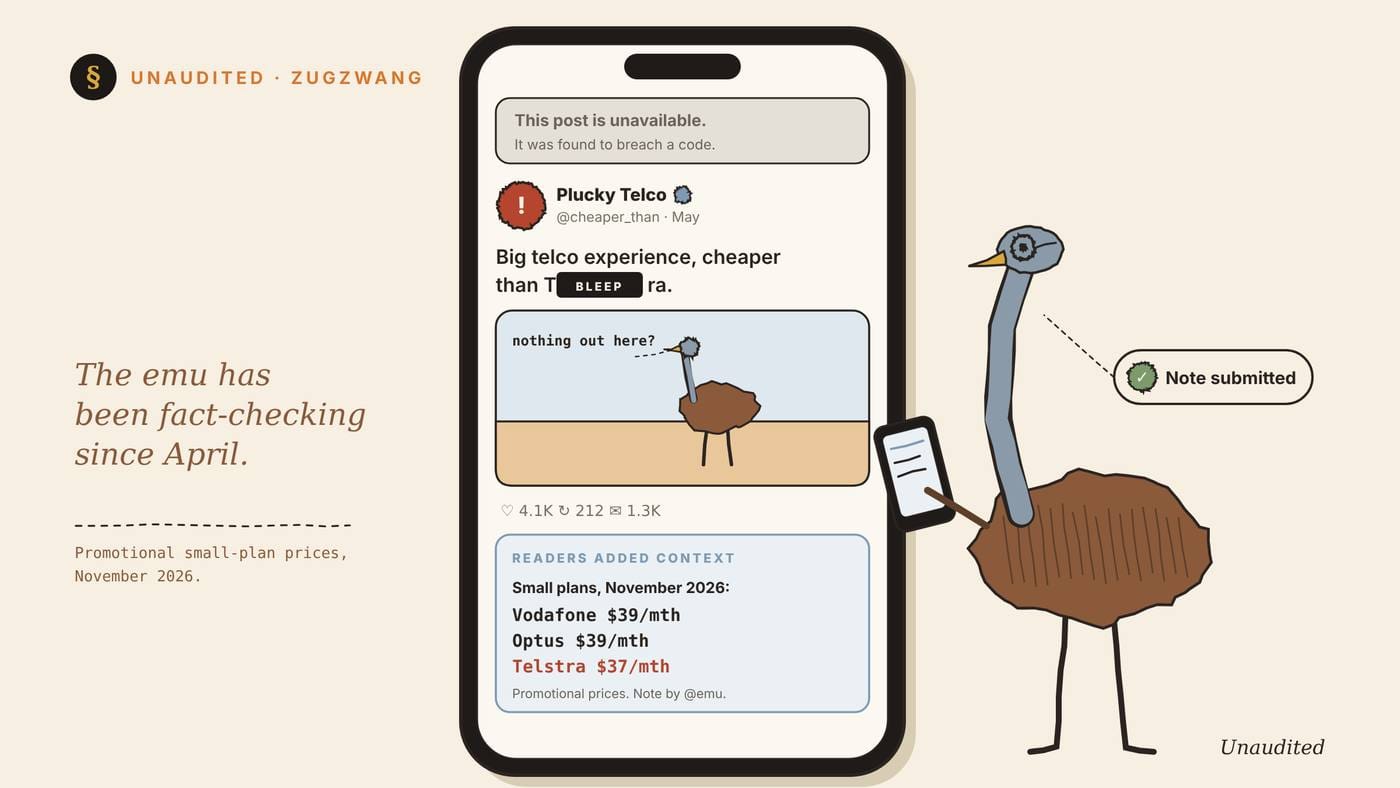
So the Vodafone Small plan costs exactly what Optus charges for its own, and two dollars more than Telstra's.
Spare a thought for the marketing department. In May, Vodafone sent the comedian Ali Wong out to tell Australians they could have a "big telco experience that's cheaper than T*BLEEP*ra". It was a bold piece of timing. Days earlier, Ad Standards had found her previous Vodafone spot in breach of the advertising code, the one that cast regional Australia as a place where "clearly, nothing's out here", and which had come off air and been recut. Six months on, the bleep is doing more work than the claim. Telstra undercut Vodafone with nothing more strenuous than a four-month promotion and, one imagines, an early lunch.
On the banner, Telstra is two dollars cheaper.
This post is for subscribers only
Terminal
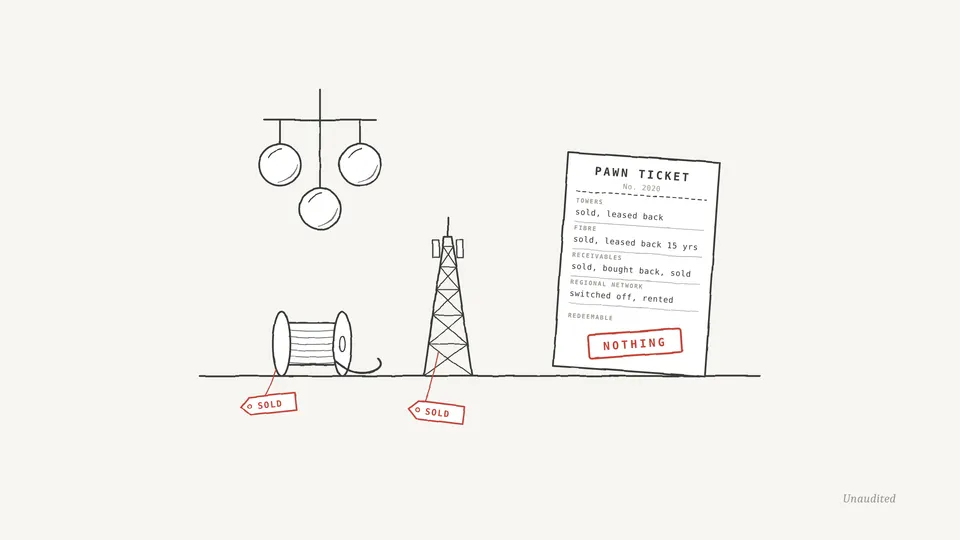
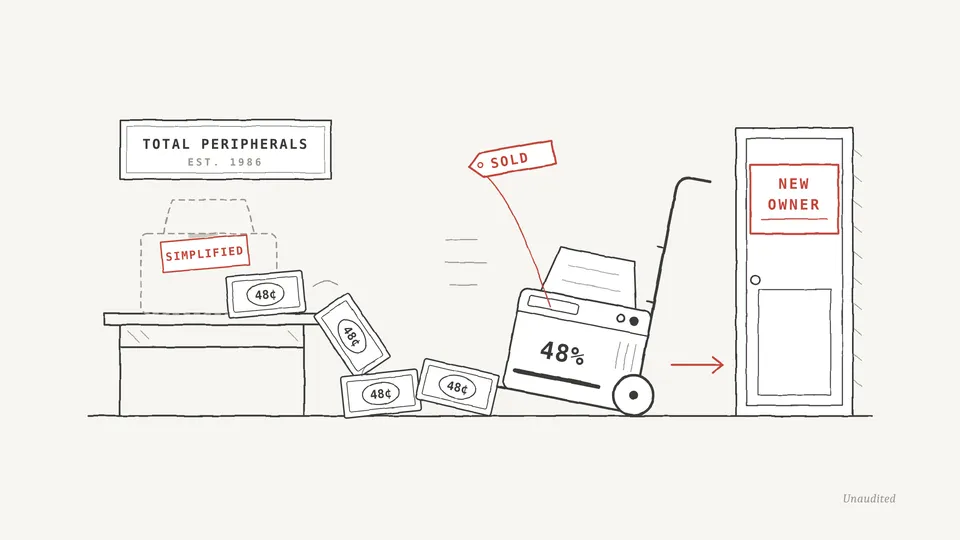
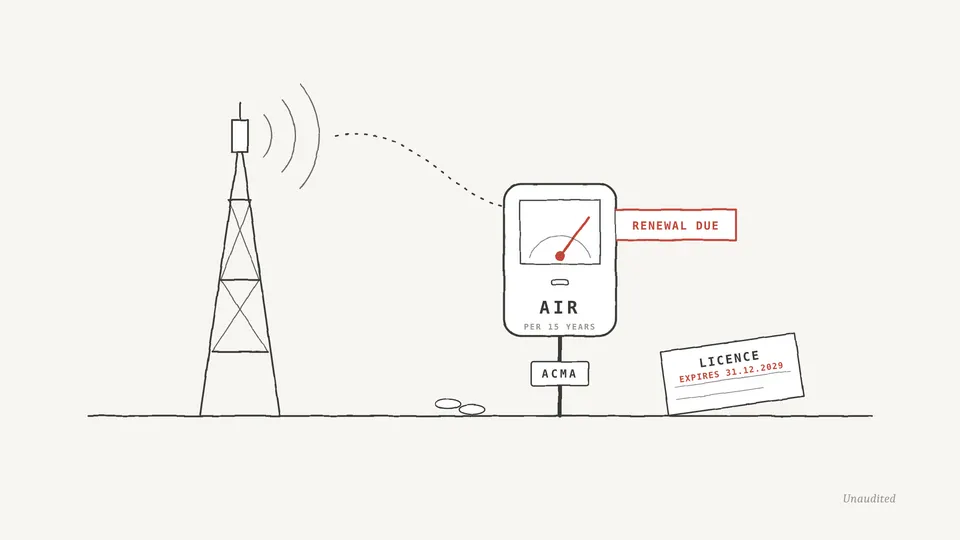
TPG Telecom, the challenger. Raised in North Ryde by a man who walked the office at night turning off the monitors. Married Vodafone in 2020, in a merger sold as competition. Spent its later years selling the furniture: the towers, the fibre, then the money printer itself. Survived by the bonuses and the hold music. Not expected to see 2036. In lieu of flowers, shareholders are asked to keep holding.