Borrowed Air
Nothing left to sell. $2.1 billion due. Naturally, a bigger dividend.
In December, Iñaki Berroeta bought a page in The Australian to explain that a month on a mobile plan can cost less than an hour’s parking in Sydney’s CBD. It was sponsored content, so at least someone was paying full price.
In June his company put its own spectrum renewal bill at $2.1 billion, with $840 million due in 2028. Last year the business it kept made $7 million before tax. In August the board raised the dividend anyway. In October S&P had leverage over its trigger and pronounced the outlook stable.
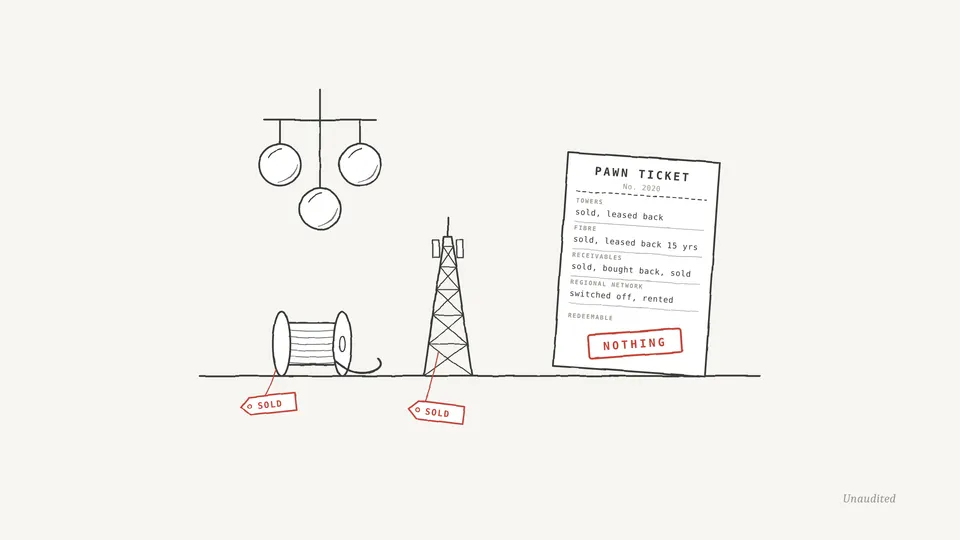
The towers have been sold and rented back. So has the fibre. The regions run on Optus. The airwaves were only ever on licence from the Commonwealth, which has now posted the renewal notice.
Berroeta was right about the parking. TPG has been circling the block for five years on borrowed air, and the meter has just expired.
Part three. Part one was what TPG pawned. Part two was what it sold. This is the one thing it never owned, and is about to pay for again.
A mobile network is three things.
Somewhere to hang the radios. Something to carry the traffic away. And the right to transmit at all.
TPG sold the first and leases it back. It sold the second in 2025 and leases that back too. Both are set out earlier in this series, and neither is repeated here.
The third it never owned. Nobody does.
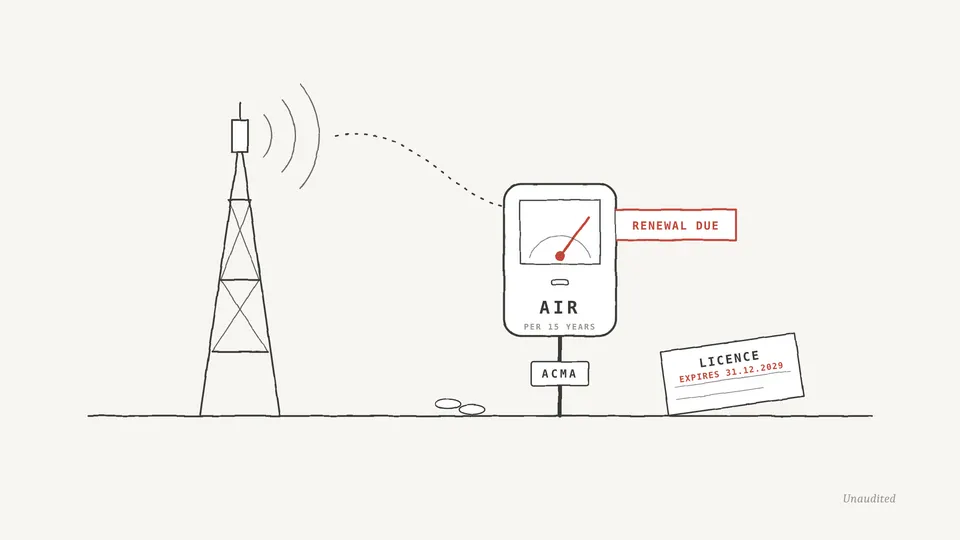
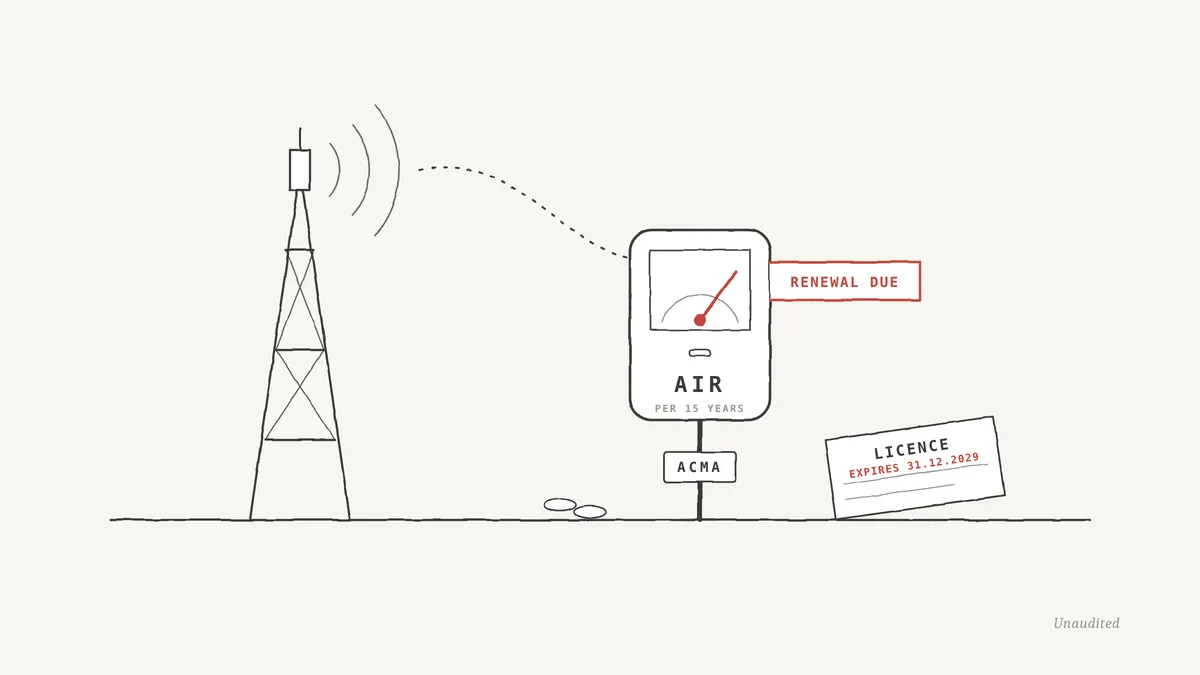
The spectrum itself was never TPG's to sell. It held a licence to use it, and the licence had an expiry date. Spectrum is a public resource, administered by the Commonwealth. Operators hold it under licence, for a fixed term, at a price the regulator sets. When the term ends, the licence ends, and the operator either pays again or stops transmitting.
For most of TPG's mobile spectrum, the term ends between 2028 and 2032.
The company describes spectrum, in its own annual report, as "the critical asset that makes mobile connectivity across Australia possible."
It is about to be reminded what the critical asset costs.
The last time it bought air
In April 2017 the old TPG paid $1.26 billion at auction for a slice of 700MHz spectrum.
The licence ran from 1 April 2018 to 31 December 2029. Eleven years and nine months. Roughly $107 million a year for the right to transmit.
It was to be the foundation of Australia's fourth mobile network. TPG began building it.
In January 2019, after the government barred Huawei from 5G, it stopped.
The spectrum outlived the plan.
It came into the merger the following year and carries traffic today, which is more than can be said for the network it was bought for.
On 31 December 2029 it expires. The rest of TPG's licences fall due either side of it, between 2028 and 2032.
This post is for subscribers only
Terminal
TPG Telecom, the challenger. Raised in North Ryde by a man who walked the office at night turning off the monitors. Married Vodafone in 2020, in a merger sold as competition. Spent its later years selling the furniture: the towers, the fibre, then the money printer itself. Survived by the bonuses and the hold music. Not expected to see 2036. In lieu of flowers, shareholders are asked to keep holding.