
A Going Concern
$2.87 on marketing per dollar of revenue. Seven dollars lost per dollar earned. Mum paid. Then it left.
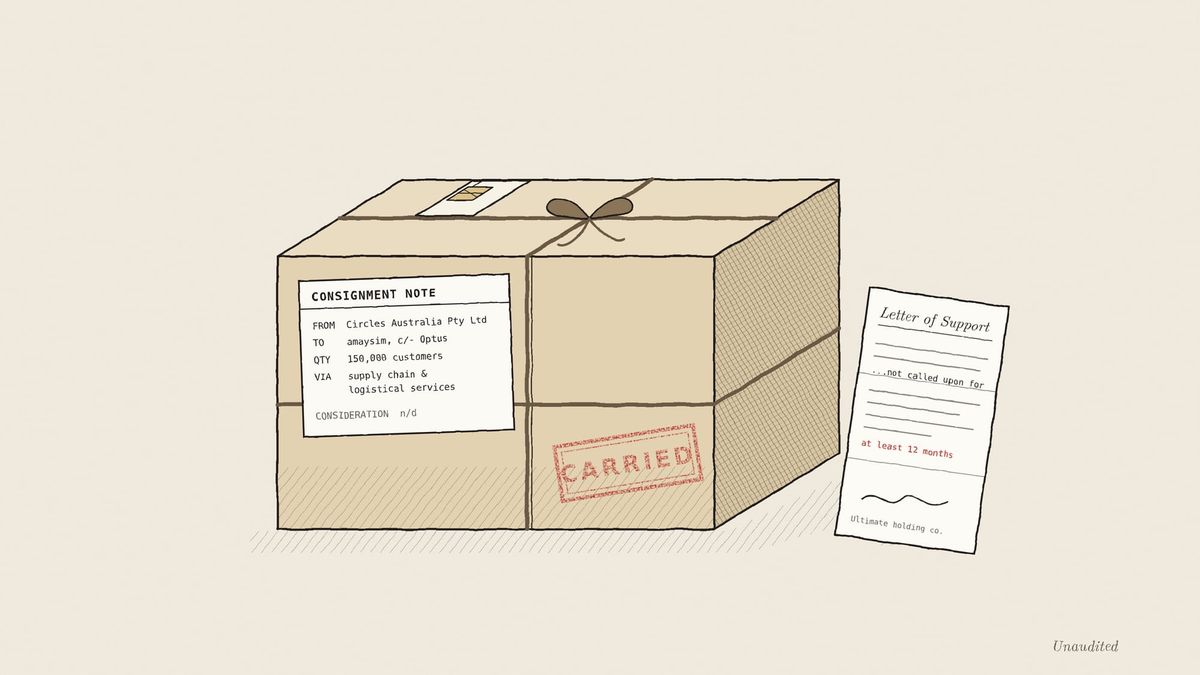
Circles.Life dared Australians to like their telco. Its first accounts show what that cost. Then, like almost every one before it, it was handed to the landlord.
There is a particular kind of Australian mobile company that isn't built to last. It's built to be bought.
It arrives with an app, a colour palette and a founder's letter. It rents a network from one of the three companies that own one. It prices below the landlord, spends heavily to prove people will switch, and explains to anybody who will listen that the incumbents have grown lazy and the customer deserves better.
Then, some years later, the customers are moved. Quietly, in batches, by email, to a brand owned by the network the challenger was renting from all along.
Nobody announces a funeral, because technically there isn't one. The customers are fine. The network is fine. The only thing that has died is the idea, and ideas don't file proofs of debt.
Circles.Life was the best-funded of the recent crop and, for a while, the most interesting. Its first set of Australian accounts, lodged with the corporate regulator and obtained by this masthead for a modest fee, shows exactly what daring Australians to like their telco costs. They are the only accounts this masthead could find. They are worth reading slowly, because the numbers are specific and the ending is not.
The Dare
Circles.Life came out of Singapore in 2016 with a proposition that was, to be fair to it, genuinely new: a mobile carrier run as a software company. No shops, no call centre, everything in the app. By 2019 it had Sequoia, Founders Fund and Singapore's EDBI on the register, with Warburg Pincus shortly after, and was spoken about in the tone venture capital reserves for things it has decided to believe in.
It launched in Australia in September 2019, on the Optus network. The headline plan was 20GB with unlimited national calls and texts for $28 a month. New customers had their bills waived for the first four months. SIMs arrived the same day. Live chat inside the app promised a response within 20 to 27 seconds. The launch statement, from its Australian general manager, said the company was daring Australians to like their telco.