
Exit Interview
Two hosts kept the microphone. Somebody else paid for it.
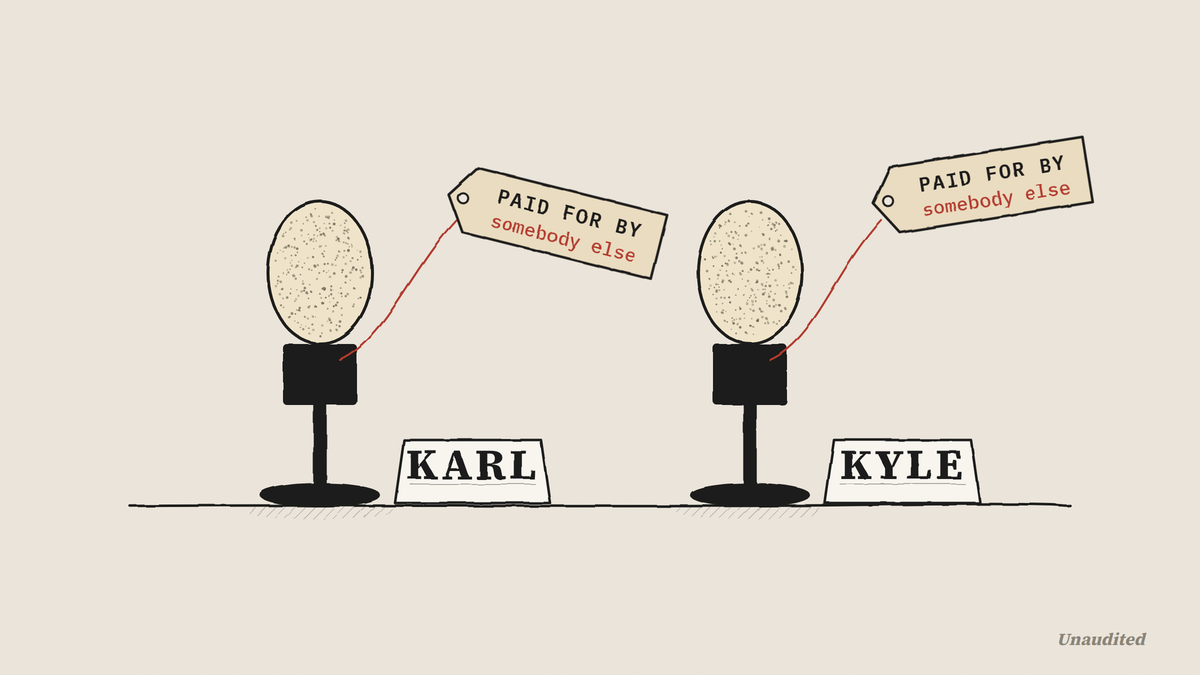
Two of the best-paid voices in Australian breakfast parted company with their networks this year, took the microphone with them and set up shop. By their own accounts, business is splendid. Karl Stefanovic now owns his show, less the tenth parked with his accountant. Kyle Sandilands says his app has made more than $5 million since August, a figure he announced himself and nobody has yet had to audit.
History is written by the winners. This time the winners have also been handling the press release.
Keshnee Kemp reportedly put $125,000 into Karl's show, was offered $100,000 to leave, and held out for a million. A valuer then reportedly needed 130 pages to conclude that the business could not run without Karl, which most listeners could have told them for nothing. On one newspaper's well-sourced and rather one-sided account, she may now leave with less than $25,000 and a legal bill eight times larger. It is the rare investment that manages to lose money twice.
ARN could not afford Kyle and Jackie O. KIIS is now discovering it cannot afford to be without them either. In Sydney its breakfast share has gone from 12.7 per cent to 6.9, and its weekly cume is down by more than 120,000.
Even that may be flattering. A listener who now pays $99 a year for Kyle at breakfast can still count in KIIS's cume by tuning in at lunch. The survey sees a KIIS listener. The sales team sees a breakfast audience, some of which has left for an app.
The last station to lose them went through five breakfast teams in five years and never got its audience back.
The replacement starts on 9 November. It is led by a vet. ARN's balance sheet is now riding on whether he can do breakfast.
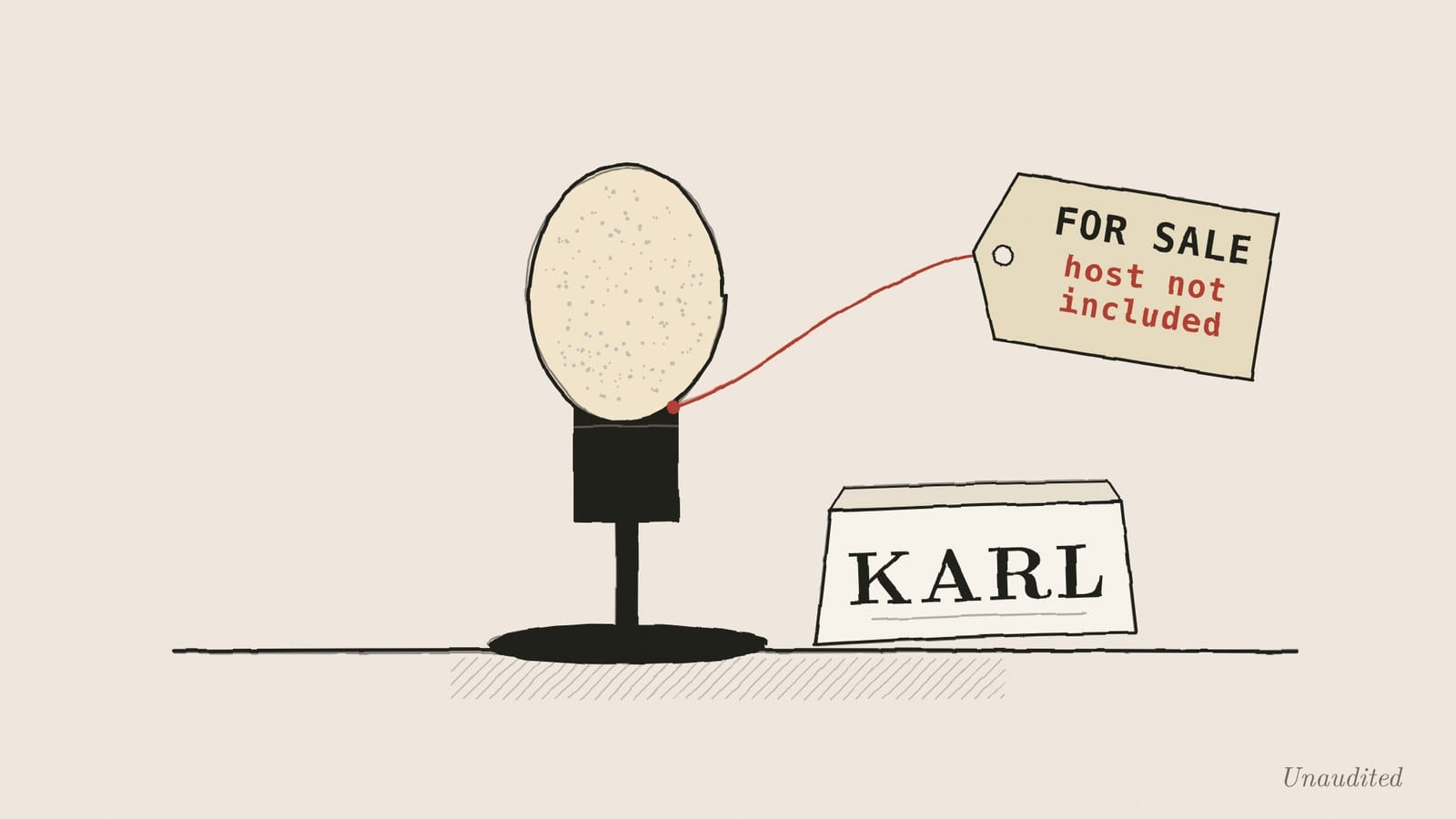
The breakaway
For decades the deal in Australian broadcasting was simple. The talent supplied the voice. The network supplied the transmitter, the sales team, the lawyers and, when it all went wrong, the cheque.
This year the deal came apart for two of its best-paid employees.
Kyle Sandilands' contract with ARN was terminated in March, after the on-air exchange of 20 February ended the Kyle and Jackie O Show. Karl Stefanovic left Nine in June, after an interview on his own podcast ended his time at Today.
Both went independent. Both now own the thing they used to rent out.
On the numbers so far, it has worked. Mr Sandilands has a $12.09 million settlement from his old employer and, he says, more than $5 million from his new venture, most of it in hand by the end of the first week. Mr Stefanovic has bought out his business partner for what was reportedly a fraction of her investment, and has his show back on air.
The $5 million is Mr Sandilands' own number, relayed by a newspaper column. The settlement figures for Ms Kemp come from the same column, and read very well for the man who paid them.
Neither account has been independently verified. One of them may yet leave a footprint, more or less by accident, in ARN's audited accounts in February.
They are not alone, and Nine has had a busy year at the exit.
Joe Aston left the Financial Review's Rear Window column in late 2023 and launched Rampart, his own subscription masthead, in February 2025. He kept a monthly AFR column, under an arrangement in which the Financial Review took a share of Rampart's revenue in return for pre- and post-publication legal support.
The old employer keeping a cut of the breakaway, in other words. ARN will recognise the structure.
Rampart says it was profitable in both of its first two financial years. In August it raised $2.3 million from five investors, among them David Gyngell, a former chief executive of Nine. Mr Aston kept 92 per cent.
In September, the Financial Review's editor, James Chessell, resigned early to join him. Days later, The Australian reported that Nine had ended the arrangement.
Nine parted ways with a breakfast host over a podcast in June, and lost an editor to a newsletter in September. The talent no longer needs the building. It occasionally still needs the lawyers.
Every breakaway has a balance sheet, though, and somebody is always on the other side of it. This year's pair has at least two: a producer who owned the wrong 45 per cent of a company split 45 and 45, and a radio network that spent a decade building a breakfast franchise it could neither afford to keep nor afford to lose.